 :
:  :
: The services and policies given by Aviva are excellent, and would definitely recommend everyone to buy a policy with them!
Mr. Dinesh Nair



Safety net for loved ones

Protect your assets

Multiple payout options
A term insurance plan is the most basic form of life insurance. It offers a high cover amount at a very nominal premium and is one of the cheapest forms of life insurance. Term insurance policy takes care of all the financial needs of your family when you are not around. Think of it the way you cast a blanket over your sleeping child, the life insurance term plan casts a safety net over your loved ones in the future. You may not be physically present to finance their future goals, but the term insurance can and will.
You might be wondering, 'Why should I buy term life insurance?' Let's explore the key term insurance benefits for you and your family when you choose a plan.
Term insurance is a type of life insurance that provides pure financial protection to your family for a specific period of time, also known as policy term. If the insured passes away during this period, the nominee receives full sum assured as a tax-free payout, helping the family cover expenses, maintain standard of living in their absence and repay loans if any. If the policyholder survives the term, no maturity benefit is typically paid (except in special return-of-premium plans). Term insurance offers high coverage at relatively low premiums, making it an affordable way to protect against life’s uncertainties.
|
Step 1: Application |
Rahul, a 20-year-old non-smoker, wants to financially protect his family. He applies for a ₹1 crore term insurance plan by filling in his personal details and submitting the required documents. |
| Step 2: Customization | Rahul chooses the most suitable sum assured, policy term, and coverage options based on his financial needs and eligibility. |
| Step 3: Evaluation |
Once the application is submitted, review happens on Rahul’s details like his lifestyle, health status, and the documents provided. This process helps the insurer assess the risk and verify the information. |
| Step 4: Policy Issuance |
After successful evaluation, Rahul’s application is approved. Since he is a non-smoker and meets the required criteria, his premium is fixed at ₹512* per month, and the policy is issued. |
| Step 5: Protection Phase |
Rahul stays covered throughout the chosen policy term, as long as he continues to pay the premium on time. If he unfortunately passes away during the policy term, his family receives the ₹1 crore sum assured, which is generally tax-free as per prevailing tax laws. |
| Step 6: Policy End |
If Rahul outlives the policy term, the coverage ends and no payout is made under a basic term insurance plan. However, if Rahul passes away during the policy term, his nominee receives the ₹1 crore death benefit. |
Rohit buys a term insurance plan and pays his premium regularly. As long as he continues paying on time, his policy remains active and his life stays covered for the entire policy term.
Scenario 1: In Case of Unfortunate Event
If Rohit passes away during the policy term, his nominee (family member) receives the full sum assured as a lump-sum payout, after claim approval.
This amount is generally tax-free as per prevailing tax laws and helps the family manage expenses, loans, and future needs.
Scenario 2: If Rohit Survives the Policy Term
If Rohit completes the policy term safely, no payout is made under a standard term insurance plan, and the policy simply ends.
However, if Rohit has chosen a Return of Premium (ROP) term plan, he may receive the total premiums paid back at maturity, depending on the policy terms and conditions.
| Type of Plans | Key Feature | Best For |
| Level Premium Term Insurance | Fixed premium & coverage throughout the policy term | Long-term financial protection at affordable cost |
| Yearly Renewable Term Insurance | Renews every year with increasing premium | Short-term or flexible coverage needs |
| Decreasing Term Insurance | Coverage reduces over time | Loan protection (home, personal loans) |
| Increasing Term Insurance | Coverage increases over time | Fighting inflation & growing responsibilities |
| Convertible Term Insurance | Can convert into another plan later without medical test | People seeking flexibility in future |
| Joint Life Term Insurance | Covers two individuals under one policy | Couples (husband & wife) |
| Return of Premium (ROP) Plan | Returns premiums if you survive the term | Those who want savings + protection |
Before we talk about how it works, you should know that a term insurance plan is a legal contract or agreement between the policyholder and the insurance company. The owner (policyholder) agrees to pay for a desired term and the insurance company agrees to pay a specific death benefit to the beneficiary or beneficiaries listed in the policy. The benefits are tax-free if they meet the certain conditions. Now, let’s take a look at step-by-step breakdown of how a term insurance plan works.
Let’s take a detailed look at the features of term insurance plans.
The best term life insurance in India will be the one that fits your needs. Compare the features,
Buying term insurance is simpler than ever, especially with online platforms. Here's a step-by-step breakdown:
Calculate the coverage amount based on your family’s future expenses, liabilities (loans), and daily living costs.
Select a trusted company with a high claim settlement ratio, good service, and transparent processes.
Pick the policy term, coverage amount, and premium frequency. You can also add riders like critical illness or accidental death.;
Review different plans for premiums, features, flexibility, and claim settlement ratios before deciding.
Provide accurate personal and medical details. A medical test may be required depending on your profile.
Complete the payment using UPI, net banking, or debit/credit card.
Get your policy via email or post. Review all details carefully and inform your nominee.
The general rule is to buy a term life insurance as early as possible because the premium is likely to increase with age and increasing medical conditions.
Here’s how a term life insurance plan can help you at every stage of life.
| Age Group | Why You Should Buy Term Insurance |
| 20's | Lowest premiums; ideal for early financial protection and covering loans or dependent parents |
| 30's | Best for family protection (spouse, kids, home loan) with affordable premiums and higher coverage |
| 40's | Important to secure dependents, children’s education, and outstanding debts despite slightly higher premiums |
| 50's & above | Helps cover liabilities and protect dependents; premiums are higher and medical checks may apply |
Note: The premium shown above is calculated for a regular premium payment mode with annual payment frequency. The premium may vary depending on age, gender and lifestyle habits.**
Term life insurance plans offer multiple payout options to ensure financial security for your family:
1. Lump Sum Payout
The entire sum assured is paid at once to the nominee. Ideal for clearing loans, debts, and managing immediate financial needs.
2. Monthly Income Payout
Provides a fixed monthly income for a chosen period. Helps maintain regular household expenses and long-term financial stability.
3. Lump Sum + Monthly Income
A combination option where part of the amount is paid upfront, and the rest is given as monthly income. Balances immediate and future financial needs.
4. Increasing Income Payout
Monthly income increases annually to beat inflation, ensuring better financial support over time.
Choosing the right payout option depends on your family’s expenses, liabilities, and future goals.
Studies show that women typically have a longer life expectancy, which often results in lower insurance premiums compared to men.
| Age | Coverage | Male (Non- Smoker) | Female (Non- Smoker) | Difference % |
| 20 | 1 Crore (60 Years) | 12261 approx* | 10984 approx* | 10% |
| 30 | 1 Crore (50 Years) | 18119 approx* | 14714 approx* | 19% |
| 40 | 1 Crore (40 Years) | 29779 approx* | 23415 approx* | 21% |
| 50 | 1 Crore (30 Years) | 51822 approx* | 40317 approx* | 22% |
Note: The premium shown above is calculated for a regular premium payment mode with annual payment frequency. The premium may vary depending on age, gender and lifestyle habits.**
This table compares premium rates for smokers and non-smokers, highlighting how lifestyle habits—especially smoking—can significantly impact the cost of term insurance.
| Age | Coverage | Male (Non- Smoker) | Male (Smoker) | Difference % | Extra Premium (Yearly) |
| 20 | 1 Crore (60 Years) | 12261 | 18965 | 55% | 6704 |
| 30 | 1 Crore (50 Years) | 18119 | 28495 | 57% | 10376 |
| 40 | 1 Crore (40 Years) | 29779 | 47677 | 60% | 17898 |
| 50 | 1 Crore (30 Years) | 51822 | 84366 | 63% | 32544 |
Note: The premium shown above is calculated for a regular premium payment mode with annual payment frequency. The premium may vary depending on age, gender and lifestyle habits.**
Consider the below aspects to select the right duration for your term life insurance plan.
1. Cover Your Financial Responsibilities:
2. Until Your Children Are Independent: If you have young kids, your term should last until they become financially independent, often around age 22–25. For example, if your youngest child is 3, a 20 or 25-year term insurance plan would be appropriate.
3. Until Retirement Age:Many people choose a term that lasts until they retire or expect to have built enough savings and assets. If you are in your 30s or 40s, you can choose term plan lasting up to 60 or 65 years.
4. If You’re Young and Just Starting Out: Locking in a 20 or 30-year term while you’re young and healthy can help you get lower premiums.
While these are general guidelines, the ideal duration for a term life insurance policy depends on your personal and financial circumstances. Find a balance between your future goals and present conditions to choose the right policy term.
Your term insurance premium may depend on the following factors:
When purchasing a life insurance, make sure to maintain transparency throughout the situation. Do not hide any medical condition or habit that you’re involved in, as it can even lead to denials later.
Here are the documents you will have to submit if you’re planning to buy term life insurance plan.
Here is a step by step guide to how to claim term insurance:
Here is a step by step guide to how to claim term insurance:
It’s not just a term insurance plan – it’s a safety net you cast around your loved ones
Because we are committed to help you prepare for life’s biggest challenges
Your Claims are our top priority (Annual Audited Financial Statement for FY 2024-25)
Awarded 7 times in a row the Most Trusted Brand (TRA’s Brand Trust Report, India Study 2026)
We are a joint venture of Dabur Invest Corp and Aviva International Holding Limited
The services and policies given by Aviva are excellent, and would definitely recommend everyone to buy a policy with them!
Mr. Dinesh Nair
I feel proud about my decision to be associated with Aviva to secure my family. I am happily enjoying my life because I know there is someone to take care of my family. Good going guys! Keep it up with such good plans and services.
Mr. Nitin Garg
I wish to extend my wishes to the Aviva Family for winning one of the Most Trusted Brands award, which builds my trust even more on the Term Plan I have with you guys. I am very happy with the services!
Mr. Deepak Sharma
All you need to know about Term Insurance

Life is unpredictable, and planning ahead is essential to safeguard your family’s financial future.

Age is more than just a number for term insurance—it’s a key factor influencing your coverage, premium, and eligibility.
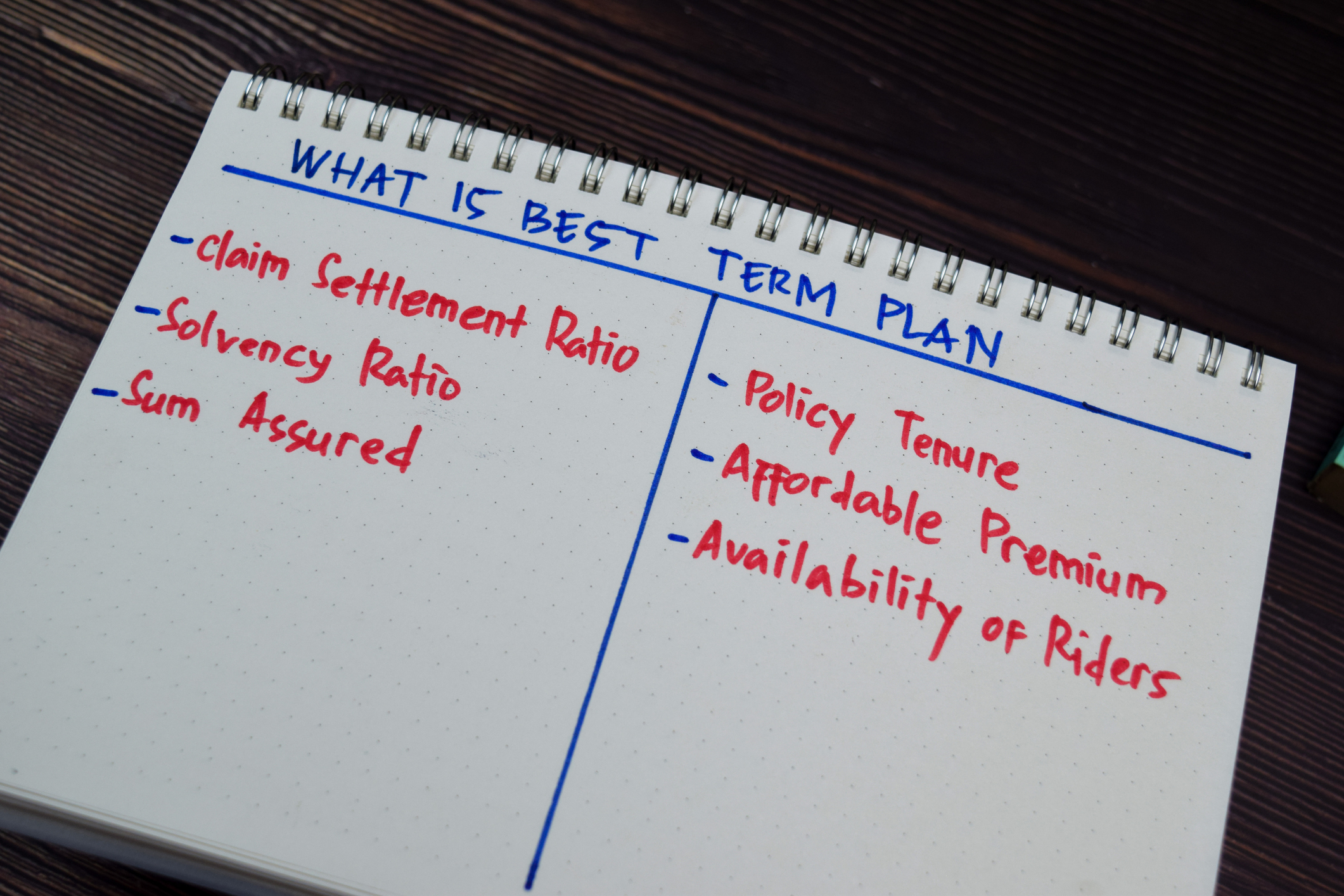
Term insurance is a pure life cover that protects your family financially at a low cost.
Life is rarely certain and unwanted events can create havoc with the best laid plans. The absence of a family member causes extreme turmoil - physically, emotionally and financially. Your life is precious, especially if you are the breadwinner of the family. A term insurance policy takes care of the monetary needs of your family even when you are not around. It helps your family settle unpaid debts & loans, fund the child’s education and deal with day to day living expenses.
Buying the term insurance plan online is really simple – just make a note of the following documents you need to attach with your application form:
Please check whether your insurer offers the following benefits before buying a term plan:
Aviva term plan offers you the best term insurance plan with the multiple benefits:
There is no defined formula to identify the amount of life cover you should opt for; it varies from person to person.
The table below gives broad guidelines which can be used as a rule of thumb.
Age Band |
Cover |
20 – 25 years (single) |
8-10 times the annual income plus any outstanding liabilities |
25 – 30 years (newly married) |
12 – 15 times the annual income plus any outstanding liabilities |
30 – 45 years (with young kids) |
15 – 20 times the annual income plus any outstanding liabilities |
45 – 55 years (post responsibilities) |
8-10 times the annual income plus any outstanding liabilities |
A term plan is the most elementary form of life insurance. By purchasing a term insurance policy, you, as the ‘policyholder pay a nominal amount as ‘premium’ for a certain period or tenure. The earlier you purchase a term plan, the lesser will be the premium (per year) you have to pay. In case, you meet an unfortunate incident resulting in loss of your life, your family or ‘nominee’ is given the ‘sum assured’ or ‘cover’ - large lump sum amount to meet your financial liabilities. In case you wish to have an additional coverage beyond just life cover, you can choose riders, such as critical illness and disability.
Like all life insurance products, term insurance also offers tax benefits. Primarily, you get tax rebates for the premiums paid under your policy. Premium paid for a term plan will offer tax benefits under sec 80C of the Income Tax Act. Any payout made to the beneficiaries is tax free.
Death cover under all circumstances except the following: